Over the next couple of weeks, I'm hoping to tease out my two main difficulties with defenses of capitalism. The first is the Darwinian language used to describe the operation of capitalism and the way that market forces ensure the survival of the "best" businesses. The second is the use of "two-consenting-adults" language to defend agreements, especially between laborers and employers. A third area of difficulty, not directly related to the language used in defending capitalism, is a common assumption that man is an entirely rational creature - an assumption which frequently ignores the power of advertising to sway consumer in ways that are contrary to their good. Finally, I'll make a couple suggestions. It's not fair to criticize without offering something of your own now, is it?
On defending your economic views: an internal memo for the Christian capitalists {part 1}
Over the next couple of weeks, I'm hoping to tease out my two main difficulties with defenses of capitalism. The first is the Darwinian language used to describe the operation of capitalism and the way that market forces ensure the survival of the "best" businesses. The second is the use of "two-consenting-adults" language to defend agreements, especially between laborers and employers. A third area of difficulty, not directly related to the language used in defending capitalism, is a common assumption that man is an entirely rational creature - an assumption which frequently ignores the power of advertising to sway consumer in ways that are contrary to their good. Finally, I'll make a couple suggestions. It's not fair to criticize without offering something of your own now, is it?
On Christian Art and Zero Dark Thirty
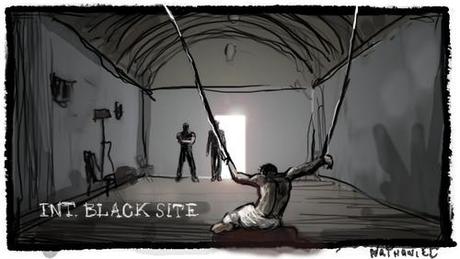
It's been nearly half a year since the one time I saw ZDT. While I may be fuzzy on the details, I think the elapsed time enables me to speak clearly to the lasting impressions the movie leaves. My friend Andrew Isker posted a comment on facebook the other day about the movie Zero Dark Thirty, which he then turned into a blog post over at Kuyperian Commentary . I disagree with his take on the movie, and so I promised him a longer response to his arguments than was possible in a facebook comment; this is that response.
I actually liked ZDT. I thought it was a well-crafted film, and I thought it was telling a good story. It's not an easy film, in any sense of the word. Andrew (who is also a co-worker and will be taking over the US History class I taught for two years) disagrees.
He makes four separate critiques, but they all center on what he sees as the movie's advocacy of torture. He says:
"Here we have torture graphically portrayed, but rather than revolting the viewer and forcing him to rethink his nation’s foreign policy objectives, it is portrayed as a necessary evil serving the interests of the foreverwar. Every time the portrayals of torture bring you to the point of being sickened, another terrorist attack will be re-enacted on screen to show you just how “worth it” torture is."In a comment, he added:
I’d like to believe that [getting Americans to think about torture differently] was what Bigelow was doing, but then why all of the re-enacted terror attacks? Why the voices of people dying in 9/11? If I’m going to make something to subliminally make people rethink their position on torture, doesn’t interspersing the primary justification for it throughout the movie defeat that purpose?
I'd like to respond on several fronts:
The movie did not actually advocate torture.
The director, Katherine Bigelow, said herself that "torture is reprehensible," and that she wished torture was not part of the history of the hunt for UBL. Her goal, she said, was to tell the story as accurately as possible within the constraints of a film (compressing ten years into two and a half hours), and that to leave out the torture would be to "whitewash" history.Now, it's possible for a director - even, or perhaps especially, a well-intentioned one - to fail. However much Katherine Bigelow wanted to avoid advocating torture, ZDT might push it in spite of her best efforts. That did not happen. There is only one scene I remember which could possibly be construed as a Rah-Rah-Torture dance, the one in which President Obama is shown denouncing torture while CIA agents gripe about how the new policies will make their jobs harder.
Zero Dark Thirty undermines the idea of torture
One of the most persuasive arguments, the one that grabs us by our revenge-gland and doesn't let go, is that "we used it, and we got bin Laden." Bigelow does her job by presenting that position clearly. At the same time, she undermines its strength through the rest of the movie.
She removes the possibility of euphemism about "enhanced interrogation." You can't watch those first 45 minutes of the movie and come away with the idea that this is leaving a guy alone for an hour, with a bright light overhead, to sweat it out. This is pretty close to Marathon Man. As Andrew Sullivan said,
"No one can look at those scenes and believe for a second that torture is not being committed. You could put the American in a Nazi uniform and the movie would be indistinguishable from any mainstream World War II movie. Yes, that's what we became in our treatment of prisoners."
She also shows how torturing other human beings breaks even the likeable characters. Many people who support torture believe that the towel-heads have it coming; if you make the decision to become a terrorist, then you're gonna get what you deserve. The same people, however, don't think that our guys deserve to suffer. If you show them what it does to us, they just might feel prompted to re-think their view of torture generally.
| This isn't even really "THE look", but it's close. |
Jessica Chastain brilliantly captured how Maya is hardened by her experiences with torture; it made her ruthless, but it also made her brittle and abrasive. The look she gives at the very end is so bleak, so shattered. Her obsession, and everything she did in pursuit of it, is written on her face. And it's not a look anybody in the audience wants to have.
Christian Art
I wrote a rant a while back about how a Christian should have made Slumdog Millionaire. It's not published (it was, after all, a rant) but the main point was that there are excellent movies being made by people who are willing to portray the world honestly while Christian artists make, pardon me, Fireproof.The Gospel Coalition blog recently posted a list of was to "Discourage Artists in the Church." Three of the items on the list apply here:
I would contend that demands like the ones Andrew has made implicitly, through his comparison to "Algiers", are part of the problem with Christian art. While I don't think Andrew would say this in so many words, his problem with ZDT flows out of the same mindset that says "Movies that portray sin need to always condemn it loudly and unambiguously."
- Treat the arts as a window dressing for the truth rather than a window into reality
- Only validate art that has a direct application
- Demand artists to give answers in their work, not raise questions ... Do not allow for ambiguity, or for varied responses to art. Demand art to communicate in the same way to everyone.
If I actually believed that Zero Dark Thirty advocated torture, I would object to it in stronger terms than even Andrew has used. But, in fact, Zero Dark Thirty undermines the mindset that supports torture. It shows the costs; it shows the reality; it shows the alternatives. It can't avoid the real historical fact: we tortured terrorists, and that torture was part of the eventually successful hunt for Osama bin Laden. It can and does, however, show us how brutally ugly the whole story was and make us, like the director, wish it had been different.
A pair of Haiku (haikus?): In Honor of the Olympics
Pensees
Epic
An old declamation
And then, O best beloved, when the world was a little older and Helen was quite settled in her home on the rugged shores, the Creator sent out a notice to all the inhabitants of the wide rolling earth telling them that on Wednesay fortnight he would give them all more height. But as everyone knows, the Scottish mails are notoriously late when it comes to delivering delicate missives or official notices, and Helen did not hear about the great gathering of the inhabitants of the wide rolling earth until it was Monday evening. So, being a person of infinite-resource-and-sagacity, she packed her gleaming throwing stars and her wailing bagpipes and threw her bright plaid shawl across her shoulders and left her home on the shores of the rocky-rolling-roiling firth of Forth and hurried to catch the last ship across the English Channel.
But when she arrived at the ship, she got the last ticket, and the boatman told her (o best beloved, you will weep to hear it) that there was no room for any luggage. For, you see, there were so many people who had just gotten the notice (owing, of course, to the notorious lateness of the Scottish mail) that the ship was very nearly in danger of sinking already from the great weight of the passengers. It was the last boat before Wednesday, and none of them wanted to be late when the creator gave out the height (indeed, some of them were very greedy and asked for double portions, but we won’t name any names here). But Helen looked at her glistening knives and her squealing pipes and her warm bright shawl and turned to the boatman and said that she would rather not leave her beautiful things behind, thank you very much (for she was a polite girl) and turned around and went back to her home on the rugged shores of the rocky-rolling-roiling firth of Forth. There she lived quite delightfully, content to sharpen her weapons and play her pipes in the twirling swirling mists.
And that, O best beloved, is why Helen is short to this day
I see my coat after walking home in the rain
My jacket is crunchy. It sat up all night, sprawled on a kitchen chair, sobering up after an overindulgence in sky-water. It walked me home from the movie, saw me safely inside the door, and collapsed.
I'm a little surprised; it's such a fastidious little spring coat, all buttons and belts and collar. Nothing sexy about it, and nothing really wild -- unless you count a little gold embroidery on the cuffs as wild (in which case, dear, we need to have a talk about what wild is). But there it is, slumped next to the table, blinking in the sunlight and asking me to walk a little more quietly.
Magic
Seed of grass, tears of sky, marrow of earth. Feed the elves, don't forget to feed the elves--they're in the coffee mug, over there in the corner. Double, bubble, toil, but oh what goodness when we cook the elves . . . just not yet, not yet. They still have work to do. Patience. Combine water, salt, and flour until you have a loose batter, then add the elves. More flour. Now it's time to knead.
Roll and press, roll and press. Standing at a counter like all the wheat-magicians before me, waving my hands in the same incantation. Stretch and fold, press. Rocking a little on my heels, I sway, entranced by the bread. Press. Dust. Roll, scrape, stretch, fold, press. Repeat. And repeat again.
Finally, it is time for the yeast-elves to work. I sit down, and wait for my minions to do their best. Ever so slowly, they push at the mixture, building it from the inside, until I decide that it has risen high enough. This isn't Dubai, you know. It's more like Babel. I push the towering structure down, dividing and remaking the masses into two -- this loaf is sheep, that one is goats. The top is stretched tight, and it'll only get worse if I don't make a cut now. So I do. A giant cross on the top of each loaf, to ward off evil.
Yes, to ward off evil. What do you think I am, a witch?
Summarizing Boethius late at night . . .
In the beginning, B is sitting in jail, wearing eyeliner and crying and sad and writing weepy poetry.
This chick shows up and kicks out all the muses, but B doesn't realize who she is. Then he figures out that she's Lady Philosophy, and she asks him what's wrong.
And B is all "My life used to be awesome. Now I'm in jail. Why did I even try being good? It's not worth it. I'm gonna go eat some worms. "
And P is all "Sheesh, you need help. Ok, basics: who are you?"
And B is all "I'm a rational mortal animal. Basically I can think and die."
P: And . . .
B: . . .
P: . . .
B: nothing.
P: "Dang, you're worse off than I thought. Let's talk.
First off, whaddidya expect from Fortune?
Second: virtue is it's own reward, all right?
Third: really, it sucks to be evil. Doesn't look like it at first glance, but if you think about it, it seriously sucks.
Fourth: yes, really, it's possible to be virtuous. Yep, God is sovereign, but free will is totally possible.
Finally: so get out and pray, already. Be virtuous. Quit your silly staring at the ground and be a man. Go, fight, win!"
The End.
Dragon-spawn
A few bits from a paper I just wrote on Euripides' Bacchae. Maybe you'll be interested.
~~~~~
Commentators have remarked on Pentheus’s early interest in Dionysian ritual, even as he voices opposition to Dionysus and imprisons the Maenads. This conflict makes sense if we understand Pentheus’s relationship to the history of the city. Cadmus, the founder of Thebes, killed a dragon and scattered its teeth into the earth. Echion, Pentheus's father, was born from the teeth, so Pentheus is, in a manner of speaking, part dragon. But Pentheus's mother, Agave, is the daughter of Cadmus Dragon-killer. Half-dragon, half-dragonslayer -- Pentheus is a divided man. In reality, Pentheus has always been part-Dionysian, which is why he succumbs to Dionysus. Peter Leithart notes that the temptation “only works . . . because Pentheus is already inclined to follow Dionysus’ instructions.” And Pentheus’s tendencies are forshadowed in the epithet “dragon-born.”
One passage that seems unfair is the curse pronounced on Cadmus at the end of the play. Dionysus praises Cadmus at the beginning of the play for making a shrine to Semele; Cadmus has been telling the city that Dionysus is indeed the son of Zeus, and Cadmus is one of the few men in the city to acknowledge him as a god. By normal standards, Cadmus has been faithful to his grandson the god. But he must be punished for two reasons. First, he is still the dragon-killer. Fundamentally, he is still opposed to the gods, and he is responsible in a way for his grandson: the messenger who relates Pentheus’s death arrives mourning, “This house founded by Cadmus, the stranger from Sidon who sowed the dragon seed in the land of the snake.”
In addition, Cadmus’s transformation into a snake represents the fate of the city itself. As founder of Thebes, Cadmus can be seen as a type of the whole city, and at the end of the story Dionysus reigns in the city. Thebes has become a Dionysian, and Cadmus has become the god’s symbol. But Cadmus is now more than a symbol – in a manner reminiscent of Oddyseus’ penance as an “evangelist” of Poseidon, Cadmus is sent out into the world to continue Dionysus’ work. He will lead barbarians, easterners like Dionysus himself, into Greece – and he will bring them in war (Ares’ domain, now usurped by Dionysus).
The Palouse
But I didn't appreciate it at the time; I pined for Ireland. The idea of green hills, rolling upward and onward into a gently raining sky was entrancing. To a child of the dry sagebrush, lush grass and cool rain seemed like heaven.
I haven't ever been to Ireland, but I've found the land I dreamed of anyway. In a little corner of the northwest, where Idaho bumps into Washington and Oregon, there are rolling hills so green with wheat that it takes my breath away every day. You only have to drive five minutes in any direction to arrive at the edge of town, and another five minutes will take you to where you can only see fields.
---
I wrote this this summer, and haven't had time to polish it or put an ending on; still, it's time for something other than sports or politics to make an appearance in this space, so here you are.
Be Careful or Be Roadkill
I went for a drive into the mountains after work tonight, and was astonished again by how amazing this little corner of the world is. I live in a city that, while not large, is too big to make it onto Garrison Keilor's talent show. It's surrounded by rolling wheat fields, and mountains -- real ones, with pine trees and air that feels colder the longer you drive -- are only minutes away. If you need something from a real city, it's only an hour's drive away.
Of course, it's still the kind of place where they name the 7-mile long bit of road "Four Mile Road." But I saw the most beautiful doe on the side of the road, right before she ran across the road and jumped the fence on the other side. And when I came back into town, driving along F street, I saw two racoons. Racoons, people! I only saw one at first, running across the road, and thought it was a cat. But as I slowed down for it, the tail looked odd. So I whipped a u-turn, pulled onto the wrong side of the road, and stared: it really was a 'coon, sitting in the middle of someone's yard! And as I turned around again, I saw it run off after another one towards the creek.
*Only for the summer, and it's not really mine. But I still get to drive it.
Life in Wonka-Land
I don't even know why I'm taking 5 minutes to type this out, because life suddenly took a vicious turn, and I'm swirling into the mouth of Charybdis (but she will vomit me out onto the beach in 3 days. At least, that's what I hope).
My hours just got bumped up again at work, and I have a Greek test on Friday and a theology paper and a theology presentation and a history presentation. And next week is Finals.
Goodbye sleep!
(But I still have four limbs and two opposable thumbs. What more could I ask for?)
200 down, 79,800 to go.
He was wet. They had heard the thunder the night before, watched the
lightning come closer and closer, and cursed their flimsy ponchos. The
deluge began before dawn. Now, staring up at the sky, he watched the clouds turning an eerie shade of mint green. It was time to get inside. He looked around. It was a grubby neighborhood, the kind that collects in big cities like dust-bunnies under the bed. The carpet of bottle-tops on the lawn proclaimed the residents' overwhelming preference for Bud Light, with a few votes for Corona. He walked up to 904 and knocked.
"Hello?"
*****
Eventually, Julia heard voices. They were distant, muffled by the rubble. Then shouting: "More . . . . here. . ." They had found Granny. What if HE was with them? The fallen rafters sagged. She twisted further under the trunk, using it as shelter from the debris. The rafters moved again, and light filtered down into the mess. That was when she saw Bill, crumpled at the base of the tree, obviously dead.
So he hadn't made it back to the house. He wasn't waiting. As the relief finally took hold of her mind, the world flickered. Before she fainted, she saw a boot and someone asked "Are you all right?"
"Yes," she said, "I am."
Rundown of Break:
How To Tie A Bow Tie
because I've always wondered . . .
Feist -- 1 2 3 4
it's so fun!
Will Ferrell in "The Producers"
I watched the old version, and started finding all the clips I could. The new one looks terrible, except for this bit
Brush Up Your Shakespeare
watching The Producers also started me on a broadway kick, but I couldn't find a better version of this song than from the movie
Stephen Colbert pays tribute to Brett Favre
in my grief, this was a shining beacon of solace
Heavenly Reality
When you step in the front door, you forget that you are in the middle of nowhere, Idaho. The dirty slush on the concrete sidewalks outside become just a bad dream. Time stops.
Abby and I shared a cheese plate to start, which was incredible. Chef Foucachon came out and told us all about the cheeses, cut them for us, and told us in what order we should eat them. It went from a soft goat cheese through something I can't remember and a Gruyere to an amazingly creamy and tangy cheese with a layer of ash in the middle (not a typo: ash), and finished up with Boursin and Roquefort.* The only two I didn't care for very much were the first and the last. I've just never liked blue cheese. I freely confess that it is my fault, that I ought to develop a taste for it sometime in the future, but I still don't like it. The goat cheese, on the other hand, was very mild and creamy and not what I expected at all.
Then we split a chicken-curry crepe (I didn't have my camera to take pictures, so you'll have to use your imagination). I love curry, I love crepes, and so it was a perfect marriage of flavors. We each had a Turinois for desert -- a chestnut-Grand Marnier-hazelnut-chocolate mousse dessert with a sauce of crushed raspberries. Have I ever mentioned that my favorite fruit in the world is raspberry? It is.
The capstone of the whole meal, however, actually arrived right after we placed our order. I had no clue what kind of wine would be best with the cheese and crepe, but I knew that I had to get a glass of wine with my meal. It's not a celebration otherwise, and if one is at a French restaurant (which will certainly have the best wines) one must have wine. So I asked for a glass of whatever wine the Chef recommended, and he came out with a bottle of Beaujolais Nouveau. Apparently they don't normally sell it by the glass, but he said that they would open it for us.
I remember reading some article about Beaujolais Nouveau last year, so I was quite excited to try it. It was delicious! I'm not a wine-expert, by any means, but I knew it was good. I can say that it was very light and almost crisp, but at the same time a very (how-do-you-say?) real wine. It didn't taste thin at all, which is what I usually dislike in chilled wines. Along with the cheese, it made my afternoon.
When we stepped back out into the Moscow afternoon air, it was like stepping off a cloud and plummeting back to earth. We had enjoyed a dose of un-reality (or heavenly reality, I wonder?), and had to go back to the business of everyday life. But it was fun while it lasted.
*I don't know if correct grammar allows for the capitalization of cheese names, but it should.
Thistlefield
There, have you changed your mind? Because I can't provide any arguments for you without ruining all the closely-kept secrets of J J Abrams and crew, and then you would hate me and the movie. So take my word, don't go, and read the following. But consider yourself warned about the spoilers.
************
Plot Synopsis: A group of friends is throwing a going-away party for their best friend who is leaving for Japan. He fights with his love interest at the party, she leaves, and while his friends are counseling him on the fire escape disaster strikes. When everyone in Manhattan is told to evacuate (something attacked from the sea), he gets a phone call from said love interest and decides to go back and rescue her. The friends, like all good friends, go with him and are slowly picked off by the rampaging monster until noone is left. The end. (Of course, we know all of this from the videotape his best friend was making at the party and kept running all night long).
Things I will grant before I criticize:
1. I watched it with a horrible audience.
There was a row of 13-year-old boys in front of us who had been chugging Red Bull all night long, two rows of high-school girls in front of them who started groaning and complaining loudly when the color bars showed at the beginning because they didn't realize that it was part of the movie, and an overly-critical and very audible couple behind us who kept making wisecracks about how well the camera was holding up.
2. It really did make me sick, which probably colored my impression of it.
I inherited my mother's stomach. I can read for hours in the car, ride any kind of ship or boat, and eat a funnel cake and pizza right before I go on the Tilt-A-Whirl. But the sheer visual mayhem was the sort of torture you would expect Sidney Bristow to endure in a remote Kazakh prison, not something for the modern movie-going public to see in a friendly neighborhood multi-plex. Just thinking about it gives me an eyeache and makes me queasy.
3. It was impressive.
There were a ton of special effects, and the 9-11 imagery was actually some of the best stuff in the whole movie. I know there was a lot of criticism of those shots in the weeks leading up to the release, but I felt like they successfully evoked the feelings that Manhattan was under attack, and that these were people who had seen something like this before. They lent verisimilitude, actually, especially because they generally imitated those real hand-held shots of the first plane crashing into the Twin Towers. And the lack of a soundtrack was really effective, because it cut out any clues as to what would happen next. It was much less corny than it could have been.
That said, I've got three main reasons for intensely disliking this movie.
First, internal consistency. "Hud," the best friend holding the camera, is a bad photographer; at the party, he can hardly keep all of someone's face in the shot for more than 3 seconds unless he is standing perfectly still. He doesn't even pay the attention to tracking that a normal person does when they hold a video camera. And all of that would be fine except for the times when he becomes a remarkably masterful cameraman, like in the stairwell. He is suddenly able to not only fade in and out with great timing while keeping the lens directly focused on the floor numbers, but he is also able to keep it from bouncing too wildly as he climbs. Huh.
Second, scariness. Or lack thereof. The scariest part was when they didn't know what the monster was, or even what was happening. As soon as they showed the whole monster, which was very very early on, it lost any element of suspense and became simply horrible. They didn't even save some aspects of it, like the little mini-monsters dropping off it, for later in the movie. On top of that, "Hud" kept making inane comments at the tensest moments, which completely deflated the fear. I can grant that this may be part of his character, and we all know folks who would crack a joke at a funeral, but it didn't help the movie to be any scarier.
Third, bad story writing. I never felt like I really could become attached to the characters -- especially "Beth," the girl he went back for. She seemed like a selfish, whiny person at the beginning, and you almost never saw her until close to the end, but she's the whole reason this pack of twenty-something civilians is wandering a war-zone Manhattan. We only see things from one perspective (interesting on a epistemological level, but not as a movie-goer). Even the hand-held camera isn't showing us "everything Hud sees" -- it shows us "everything Hud remembers to point the camera at, which usually excludes eyes, chins, or both." Even though one girl escapes, we never find out what happens to her. We don't know what happened afterward, except that the tape was found in "the area formerly known as Central Park." There's no resolution.
All in all, a waste of money. But if you still want to see it after this, you only have 3 options: die here, die in the tunnels, or die up top. Take your pick.
Culinary Vagaries (or, why you need a lid on the pot)
In fact, I loved it so much that I resolved to implement what I could from the book as soon as I returned to school. I got a chicken, pre-cooked as a concession to my busy schedule, and took all the meat off the bones. That done, I turned to the recipe for white stock, one of the basic things Father Capon says one must always have on hand. I carefully put a bay leaf, the chicken bones, some carrots and onion, and a little bit of salt and pepper in a quart of water. The pot went over the heat, with the lid on. But there I made a fatal error -- I did not smack the ill-fitting lid down tightly before I went out to the table to study my greek homework. And half an hour later, my roommate walked into the kitchen and asked "Was somebody cooking something?" The kitchen was filled with smoke, and my slowly blackening saucepan contained the charred bones of my stock. It was completely beyond rescue. Ah, well, such is the life of an elf.
Still, my enthusiasm for the book remains undiminished. Yes, Father Capon does marvelous things with an onion (oh, you will never again read "peel and chop an onion" without a brief moment of silence). He makes you long for stock, bread, lettuce, roasts, wine and butter. But the following are my favorite quotes.
I love the first because it is so anti-feminist. Part of the joy of reading Father Capon is his refusal to see managing a home as something women must settle for; femininity is glorious and exalted, a mystery of power in weakness and skill instead of force:
On dieting:
Properly edged and skillfully used, a cleaver will prepare whole meals without the assistance of another knife. But it does more. It bolsters your ego as a cook. Parting chickens with aplomb, you begin to believe you really might make it. And so does everyone else. A woman with cleaver in mid-swing is no mere woman. She breaks upon the eye of the beholder as an epiphany of power, as misterss of a house in which only trifles may be trifled with -- and in which she defines the trifles. A man who has seen women only as gentle arrangers of flowers has not seen all that women have to offer. Unsuspected majesties await him. . . .
You will also be provided with an instant rejoinder to anyone who presumes to lecture you on housewifery as an abject capitulation to the feminine mystique. Simply let him see you presiding over your kitchen with steel in one hand and butcher knife in the other. Execute six well-drawn strokes and his words will turn to ashes in his mouth. He was ready for a maladjusted prisoner of the pantry; you have showed him instead one of the priestly archetypes of the race. Mystique indeed! He has hardly scratched the surface.
A calorie is not a thing; it is a measurement. In itself, it does not exist. . . . Only things, you see, are capable of being eaten or burned, loved or loathed; no one ever yet got his teething into a calorie. . . . How sad then, to see real beings -- Harry and all his fellow calorie counters -- living their lives in abject terror of things that do not even go bump in the night. What a crime, not only against hospitality, but against being to hear him turn down homemade noodles in favor of idols and abstractions -- to watch himself prefer nothing to something. . . . Food does not exist merely for the sake of its nutritional value. To see it so is only to knuckle under still further to the desubstantialization of man, to regard not what things are, but what they mean to us -- to become, in short, solemn idolaters spiritualizing what should be loved as matter. A man's daily meal ought to be an exultation over the smack of desirability which lies at the roots of creation. To break real bread is to break the loveless hold of hell upon the world, and, by just that much, to set the secular free.
From the end of the book:
Why do we marry, why take friends and lovers, give our selves to music, painting, chemistry, or cooking? Out of simple delight in the resident goodness of creation, of course, but out of more that that, too. Half of earth's gorgeousness lies hidden in the glimpsed city it longs to become. For all its rooted loveliness, the world has no continuing city here; it is an outlandish place, a foreign home, a session in via to a better version of itself--and it is our glory to see it so and thirst until Jerusalem comes home at last. We were given appetites, not to consume the world and forget it, but to taste its goodness and hunger to make it great.
Twitch, Twitch.
He must be asleep, I tell myself, because his eyes are closed. But he keeps lunging his shoulders into the aisle, contorting his head and shoulders before drooping limply forward. Then he starts jerking and bouncing his knees violently, shaking the whole row. I wonder what he'll do when we take off . . .
{Later}
The Twitching Calcuttan is slowly encroaching on my space, that sacred area between the armrests on the seat and the luggage-rack bars under the row in front of us. Elbow-wise and bouncing-knee-wise, he is taking over, and while my normal policy of elbow-room sharing dictates accomodation, I find myself tempted to administer a swift jab to the offending arm and then resist any attempts by this dozing moron to take any further space whatsoever. I want to "accidentally" poke him with my pen. Goodness! Am I losing all compassion?
[Editorial note: He revived when the beverage service came around, and remained moodily awake for the rest of the flight.]